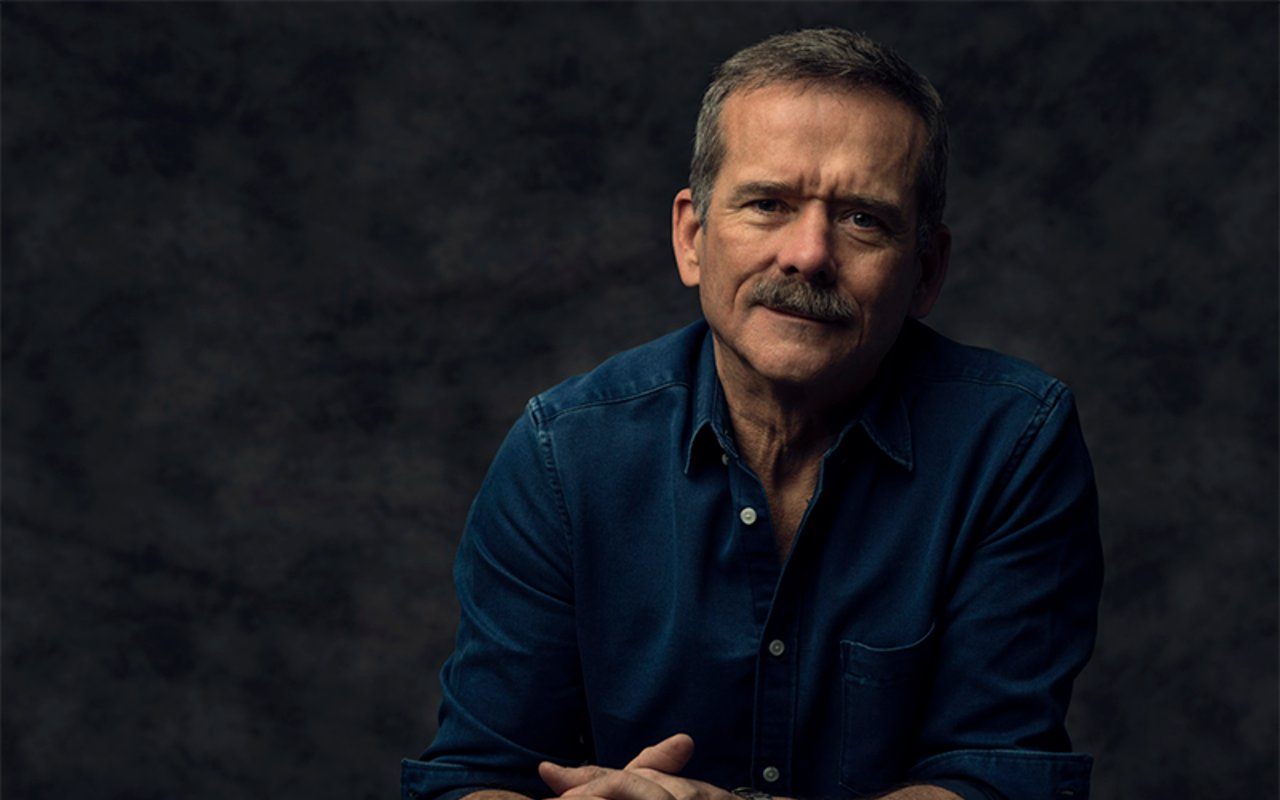
In Conversation With Chris Hadfield
Canadian astronaut and bestselling author Chris Hadfield returns with Final Orbit, a Cold War thriller that blends history, cutting-edge science, and human drama. In this exclusive conversation, Hadfield discusses the line between fact and fiction, lessons from Mission Control, and how a new era of global ambition is unfolding beyond Earth’s atmosphere.
The Collection: Final Orbit takes us to 1975 and a high-stakes Apollo-Soyuz mission. Why choose this moment to launch your story?
Chris Hadfield: It was the last mission of the Apollo program, the height of the Cold War, and a very symbolic demonstration of cooperative docking between a Soviet and American spaceship at a time of great tension. It was the beginning of Gerald Ford’s presidency after Nixon’s Watergate, the very start of the Chinese space program, and a time of great strife with bombings across the U.S. As a thriller writer, that is a great mosaic of threads to pull.
TC: The book mixes real history with fictional characters and events. How do you find balance between authenticity and creative license?
CH: I don’t want the reader to be able to tell the difference. I researched for a year to make sure I understand the facts, and dig out all the potential things that could make the plot more interesting. There’s a tremendous amount of background work and development of the framework. But once I have that, the plot can really be engaging because all these real players are doing real things dangerous and high-stakes things. Every single thing in Final Orbit could have easily happened if the dice had rolled a different way.
TC: Your writing brings details like the smell of burning in space, or the effect of oxygen loss on the body. How did your experience as an astronaut help you approach scenes like that?
CH: I was an astronaut for 21 years and only flew in space for six months. I spent 20 and a half years training medical training, learning to speak Russian, living at the bottom of the ocean. It puts me in an advantageous place to write because I don’t have to ask other people.
For things like the smell, I use the direct conversations between the crew and Mission Control, what they were actually saying. I use that as the script wherever I can because that’s what people actually said, and it keeps real credibility and authenticity. I really want this to be transportive, so that while you’re reading it, it not only feels like you’re there, but you’re actually learning.
TC: This is your third entry into fiction. How do you feel you’ve evolved as a writer?
CH: I’m a much more efficient writer. When I started, everything was the same importance. You don’t know what you can afford to ignore. When I wrote The Apollo Murders, I wrote 195,000 words because I didn’t know what I didn’t need to write. Once I’d gotten it all down, I realized, “Shoot, this whole thing didn’t actually contribute to the plot.” So, we threw out almost a whole novel. A lot of those ideas developed into The Defector and Final Orbit, so they weren’t wasted.
TC: Your book deals with Cold War rivalries. In today’s world, how would you describe the state of international cooperation in space?
CH: There’s a proxy war in Ukraine between the West and the East. Who’s backing Russia? Who’s backing Ukraine? Why? It’s a tremendous test bed for new space-based assets and drone technologies.
China and the United States are the two most powerful nations and in direct conflict in many areas: influence, territory, even the Moon. The only real governing document is the Outer Space Treaty from the 1960s, written to avoid nuclear proliferation in space. But it doesn’t clearly define property rights on the moon. Is it first-come, first-served? How does that even work? If you can’t defend your assets, someone else can take them. So, there’s a strong resurgence of a Cold War mentality between China and the U.S.
At the same time, on the International Space Station, we’ve had countries cooperating 24/7 for 30 years. We alternate command Americans fly on Russian rockets, and Russians on American ones. Despite disputes, there’s still common purpose. Space is a great sphere for that. It’s simply beyond the means of one country. The more you cooperate, the better chance you have of success. That’s been a defining feature of the ISS from the start.
However, China now has its own space station orbiting the world, and the ISS is orbiting the world, and the streams don’t cross. China plans to put astronauts on the Moon by 2030, and is completely credible in its process. The U.S. plans to orbit the Moon in February with four astronauts, including Canadian Jeremy Hansen, and aims to land by 2030. It’s a setup for conflict.
TC: What should our government be doing to strengthen Canada’s position in space?
CH: I wrote an opinion piece in the Globe on that. We need more responsibility for our own defense and for our membership in NATO and NORAD. The current government has committed a significant percentage to defense and sovereignty, not seen since WWII.
The piece I wrote asks what portion of that spend should be on space technologies, because space is now a visible part of conflict. If everyone relies on Starlink, someone else could just shut it off, and then what do we do? Using current tensions to make good decisions for Canada is key.
There’s even a rocket sitting on a pad in southern Newfoundland from a company called NordSpace, building domestic launch capability so our military can launch from Canadian soil. Not having that autonomy is precarious. We’re counting on relationships that have proven more combative than ever.
TC: What are you working on next?
CH: I’m working on the fourth book in the Apollo Murder series and a young adult book. We have a very good book for children called The Darkest Dark about how to deal with fear as a small child. Then I wrote An Astronaut’s Guide to Life on Earth, which is rules for living a more satisfying and productive life. But I haven’t tried to coalesce my thoughts into something that someone between about 10 and 15 can access.
I’m also running an international technology incubator called the Creative Destruction Lab. It’s developing technologies the world needs to sustainably give a good quality of life for 10 billion people.
And I have a big show at Massey Hall on November 27th called Generator. It’s ideas as entertainment. We sell out every year, and it’s a really interesting evening.
TC: Congratulations and best wishes with Final Orbit.
CH: Thank you, appreciate it.
For more information on Chris Hadfield, follow: @colchrishadfield. Chris Hadfield’s latest book, Final Orbit, is now available. Find it where books are sold or visit this website.