On Film, Public Space, and Shared Experiences
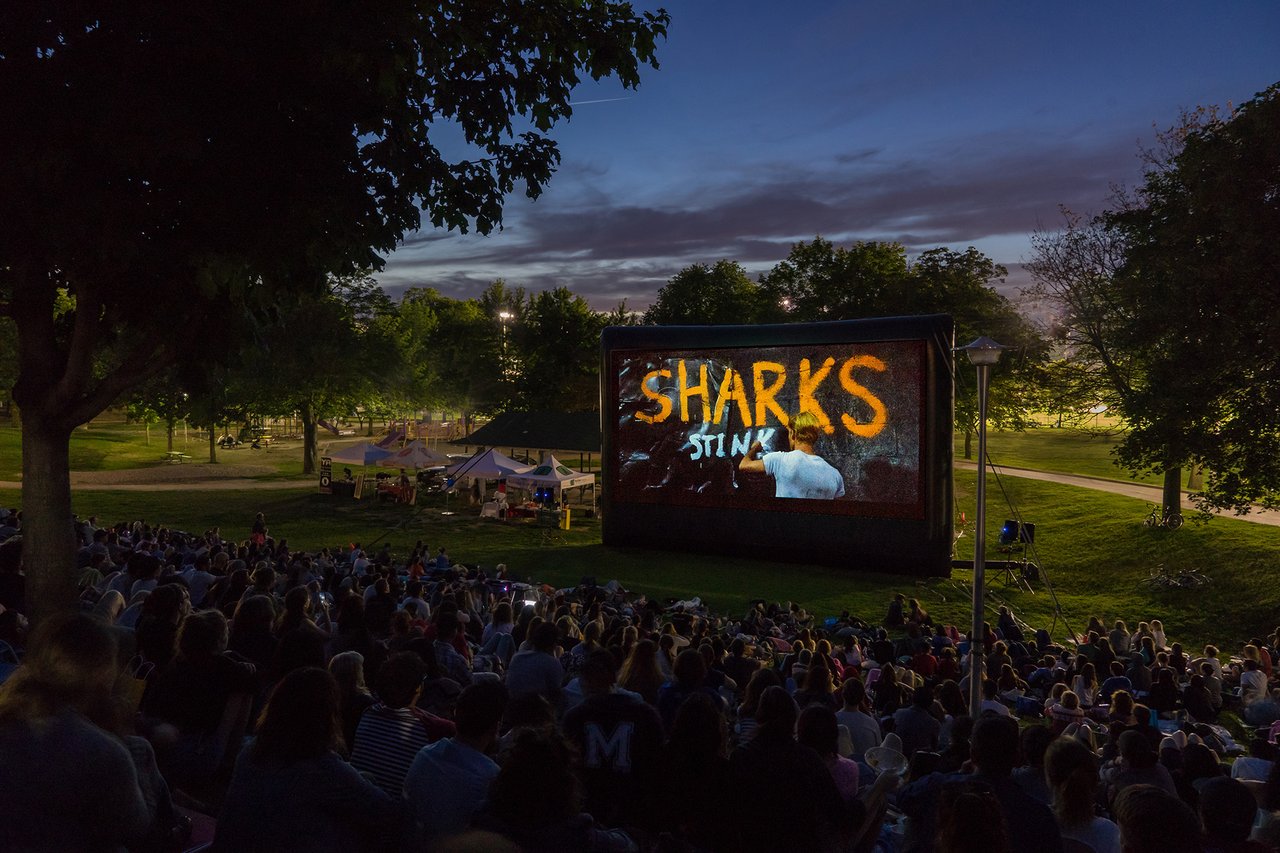
Every summer, Toronto Outdoor Picture Show (TOPS) transforms parks across the city into open-air cinemas, drawing thousands of people together to watch films beneath the stars. What began as a grassroots initiative has evolved into one of Toronto's most anticipated cultural traditions, pairing beloved classics with acclaimed international features, emerging Canadian voices, and thoughtfully curated short films.
At the centre of it all is Emily Reid, TOPS' Artistic & Executive Director. A passionate cinephile and cultural programmer, Reid has spent years considering not only what audiences want to watch, but how films can shape shared experiences in public spaces. Under her leadership, TOPS has become known for programming that is both accessible and adventurous, welcoming audiences with familiar favourites while inviting them to discover something new. Ahead of this summer's festival, Reid spoke with The Collection about curation, audience curiosity, and why a particular film, in a particular park, on a particular summer night can become part of how people remember a city.
The Collection: Every TOPS season is built around a central theme. What makes a theme compelling enough to build an entire summer of programming around it?
Emily Reid: That's a good question. I don't know if I've been asked that one before.
The answer has changed as the festival has evolved. When there were only three or four screenings, a theme could be a bit narrower. Now that we're presenting more than twenty events, the theme must be larger and more comprehensive.
There are themes I've thrown out because they didn't seem like they would stay interesting over that many screenings. We want something that allows for a lot of different kinds of films, and therefore, a lot of different kinds of audiences.
Usually, it starts with a film. There are almost always one or two films that spark an idea, even if that isn't the exact theme we end up with in the end. This year's theme, Going Places, grew out of conversations we'd been having for years around road movies. Then I saw Hit the Road by Iranian filmmaker, Panah Panahi, and realized there was probably a lot more to explore there than we had originally thought.
TC: If someone looked at the themes you've programmed over the years, what do you think they would learn about you?
ER: I hope they would learn that we curate our programs very inclusively, and I don't say that as a buzzword. I say that because it's what makes us different from a lot of outdoor cinema programming.
Outdoor screenings are often geared either toward very popular films—which we certainly have—or they're aimed at children. Sometimes people forget that children go to bed before sunset.
We've done Mary Poppins, but June is not the right time of year to show Mary Poppins. Sunset is after nine o'clock.
We certainly play the hits. You'll see a film like Titanic in our program. But you'll also see Wildhood, by Bretten Hannam, an Indigenous filmmaker from Nova Scotia, and you'll see a film by Jafar Panahi, an Iranian filmmaker and actor. We're trying to engage our audiences in thoughtful conversation but it's always welcoming. And there's always something for everyone in the program, even if every screening isn't necessarily to each person's taste.
TC: What separates a film you admire from a film you feel compelled to share with an audience?
ER: Context. There are films I admire that simply aren't appropriate for the environment we're working in. We operate in public spaces, and while some people have intentionally come to watch a film, there are also passersby, people walking their dogs, or people arriving with friends.
Sometimes a film requires too much contextualization. It may be a great film and one that I admire for many reasons, but if I can't create the conditions for a thoughtful presentation for everyone who's there, then it's probably not the right fit for TOPS.
The details that are less visible are often the ones I care about most. Who would be included if we show this film? Who do we want to make sure is not excluded? Those are fine details, but I think they make or break a good program.
TC: You've spent years standing at the edge of audiences watching them react. What have those audiences taught you?
ER: They've taught me that we like to laugh together. We also like to cry together, even outdoors. There are scenes of a thousand people weeping together, which can be quite moving to watch.
But I think the biggest lesson is that our audiences are very curious. We continue to mature the program every year. We still have those nostalgic tentpole films because they're anchors for the season, but I love when audiences respond positively to an experimental short film or a Canadian feature by a director they've never heard of.
One screening that really stays with me is I Saw the TV Glow by Jane Schoenbrun last year at Fort York. It's a very introspective film, and we were a little worried that showing it outside might require too much audience attention for people to fully engage with it. You could hear a pin drop throughout that entire screening. There was no chatter, and no one left. Everyone who came became completely engaged with it.
The messages we received afterwards from members of the queer community about how meaningful the screening had been were really special.
TC: We tend to rely on algorithms to tell us what to watch. Why does human curation still matter?
ER: Maybe I'm intentionally staying in my anti-AI bubble, but I don't see how an AI service can do what we do.
Sometimes when we see an outdoor cinema program that doesn't feel particularly thoughtful, we jokingly call it a "ChatGPT program." It's the obvious answer. Give me films about female friendship and the same handful of titles come up.
The interesting part is everything beyond that. Every screening at TOPS pairs Canadian short films with a feature. Sometimes it's a line spoken in a short film that really resonates with the feature that follows. That's something a human experiences and recognizes.
Those are human decisions, and I don't think we can hand that kind of decision-making over to AI and hope for the same result.
TC: Is there a moment in TOPS history that captures why you've dedicated so much of your life to this work?
ER: Last year's screening of Moonlight under a full moon. I didn't intend that part…I only realized as we were getting closer that it was going to be a full moon that night.
We had close to 2,000 people gathered together on a really hot summer night near Toronto's Gay Village, watching a film that really broke open mainstream queer storytelling a decade ago.
I think about screening that film and how different it would have felt ten years earlier, or twenty years earlier. Films that become cornerstones often create a moment of reflection. Some people are seeing them again after ten years, and others are seeing them for the first time because they missed them the first time around.
What I hear most often from audiences is people remembering very specific moments in time that they've spent at TOPS: A particular film. A particular park. A particular summer.
Those are kind of the stamps that we put on Toronto.
TOPS is pleased to return to public parks this summer. Visit: topictureshow.com for all the details.