Image credit: Destinationtoronto.com
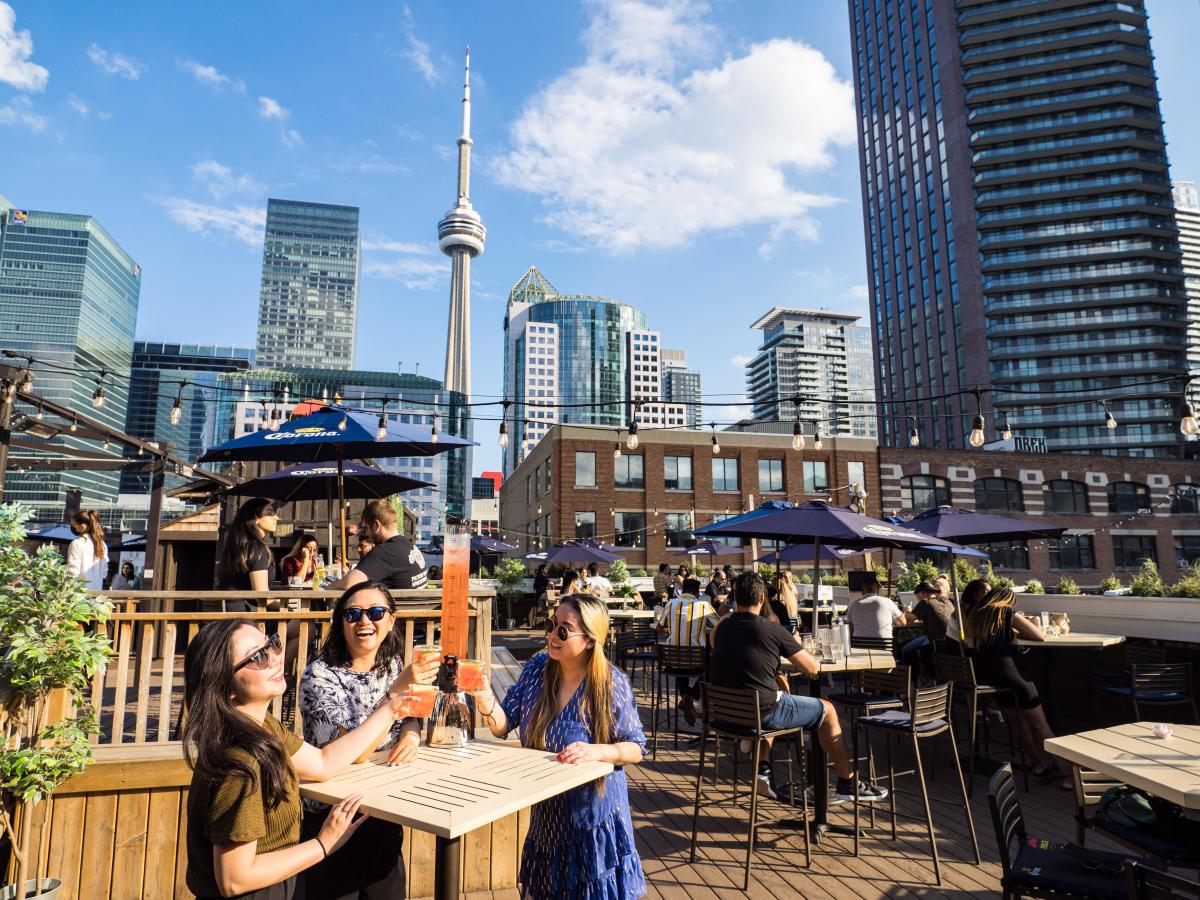
There is a specific Thursday when it happens. Not a Sunday, not a long weekend, not any date marked on a calendar. Just a Thursday when the temperature hits 14 degrees and holds. By five o'clock, every patio chair in Yorkville is occupied, and someone on King West is eating oysters in a light jacket with no particular plan to go inside. Toronto does not ease into patio season. It arrives all at once, and certain neighbourhoods arrive faster than others.
This article explores neighbourhoods where spring isn't a date but an atmosphere; where the shift from winter to outdoor living is something you feel on the street before you have consciously registered that winter is over.
Why Some Neighbourhoods Come Alive Before Others
It's About Street Design as Much as Temperature
The neighbourhoods that wake up first share a few structural features that have nothing to do with the calendar. They have ground-floor retail with wide frontages that spill outward easily. They have streets narrow enough that patios feel like extensions of the sidewalk rather than isolated outposts. They have foot traffic at the right density — enough that sitting outside feels social rather than exposed.
Rosedale does not have a patio scene for the same reason that Yorkville does. The residential streets are beautiful, but they are built for privacy. The neighbourhoods that wake up loudest in spring are built for exactly the opposite.
The Relationship Between Patio Culture and Property Value
This is not merely a lifestyle observation. The walkable, activated streets that produce Toronto's best patio seasons are consistently some of the same streets that produce the city's most resilient residential values. According to a 2024 report by the Toronto Regional Real Estate Board, properties within 500 metres of high-density retail and restaurant corridors in central Toronto outperformed the broader city average on appreciation over a five-year period. Outdoor dining activation is both a symptom and a cause of neighbourhood health — and buyers who understand this tend to make decisions that hold up well over time.
For anyone currently exploring what is available across Toronto's most established communities, the patio question is a reasonable proxy for a more fundamental one: what does this street actually feel like to live on?
The Neighbourhoods That Go First
Yorkville: Still the Standard
Yorkville does not need an introduction, but it does deserve an honest one. This is the neighbourhood that invented Toronto's idea of outdoor luxury dining, and it has not relinquished the title. By mid-April, Yorkville Avenue and Hazelton are lined with terraces doing serious business before the trees have fully leafed out. The clientele are dressed as though the season started a month ago. The restaurant operators have been planning this since February.
What makes Yorkville worth including here is not the spectacle — it's the consistency. The neighbourhood activates at the same time every year, with the same confidence, and the residential streets running north and south of Bloor carry that energy into the blocks closest to them. Buyers considering addresses in this corridor are buying into one of the city's most reliably activated urban environments, and that reliability has a value that is difficult to quantify but easy to feel.
King West and the Entertainment District: Volume and Energy
King Street West operates at a different register than Yorkville. Where Yorkville is curated, King West is kinetic. The moment the temperature cooperates, the patios along King between Bathurst and Spadina become some of the most activated outdoor spaces in the city. This is a neighbourhood where the restaurants were designed with the patio as a primary consideration rather than an afterthought.
The residential market along this corridor has matured considerably over the past decade, with some of the city's most architecturally notable addresses now occupying streets that would have been unrecognizable 20 years ago. Buyers who want density, energy, and the full spring-into-summer arc of Toronto outdoor life tend to find what they are looking for here.
Ossington Avenue: The One That Grew Into Itself
Ossington is the neighbourhood that surprised people by becoming serious. What began as a scrappier alternative to the Bloor and Dundas corridors is now one of the city's most compelling stretches of ground-floor retail. Its patio culture activates quickly and continues late into the evening. Restaurants along Ossington tend to be independent, serious about their food, and genuinely invested in their outdoor spaces as places rather than marketing exercises.
The residential streets running east and west off Ossington — particularly the blocks toward Trinity Bellwoods — are among the more interesting in the city for buyers who want neighbourhood character without the substantial price premium of the more established corridors. Walkability here is not aspirational. It's structural.
The Danforth: East End, Early Riser
The Danforth activates in a way that surprises people who have not spent time in the east end. Between Pape and Woodbine, the strip has a density of restaurants and patios that rivals anything in the west end, with a neighbourhood confidence that doesn't ask for validation. By late April, the Greek restaurants and their sidewalk terraces are operating at full capacity on weeknights. Foot traffic along the main strip creates the kind of ambient energy that makes a neighbourhood feel alive.
The residential streets running north and south of Danforth — particularly toward Playter Estates and the Blake-Jones neighbourhood — offer some of the city's better value in detached housing within walking distance of a genuinely activated commercial strip. Families making decisions about where to find the right schools alongside the right neighbourhood often find the east end delivers on both fronts.
Summerhill and Yonge and St. Clair: The Quieter Version
Not every spring awakening is loud. Summerhill and the Yonge and St. Clair corridor offer a version of patio season that is more measured but no less genuine. The wine bars and neighbourhood restaurants along Summerhill Avenue, and the side streets near St. Clair, start putting chairs out in early April — and the effect is intimate rather than theatrical. Neighbours recognize each other. The same table fills up on Friday evenings with what appears to be the same group of people, which is either a sign of community or the best possible kind of routine.
The residential context here is among the most consistently desirable in the city. Streets like Balmoral, Heath, and the blocks running west from Yonge toward Forest Hill carry the kind of quiet confidence that holds its value across market cycles — because the underlying neighbourhood quality simply does not fluctuate the way that mood-driven markets can.
What Patio Season Tells a Buyer About a Street
The Things You Cannot See in January
Patio culture reveals how a retail corridor is truly performing. It shows whether foot traffic is steady or seasonal, and whether the restaurants are local institutions or simply the third occupant of the same space in five years. These are meaningful signals about neighbourhood trajectory that do not appear in a comparable sales report.
Spring is a particularly honest season because the energy is real and recent and has not yet had time to become performance.
The Street Is Part of the Property
This is something our agents at Harvey Kalles Real Estate often say: a property's value isn't contained within its walls. The retail corridor two blocks over, the patio on the corner that fills up in April and stays busy through October, and the neighbours who walk the same street at the same hour each evening are all part of what you're buying. The most informed buyers understand this before they make an offer.
The Season Is Starting. So Is the Market.
Spring in Toronto is more than patio season. It is also one of the most consequential periods in the city's residential market. Inventory increases, buyers who have been waiting since January begin to act, and properties in the right neighbourhoods start to attract the kind of attention that leads to competitive situations.
If you're considering a move into one of these neighbourhoods and want to work with people who know these streets as well as regulars know their Friday evening table, we would be glad to start that conversation.
Explore what is currently available or connect with our team directly.