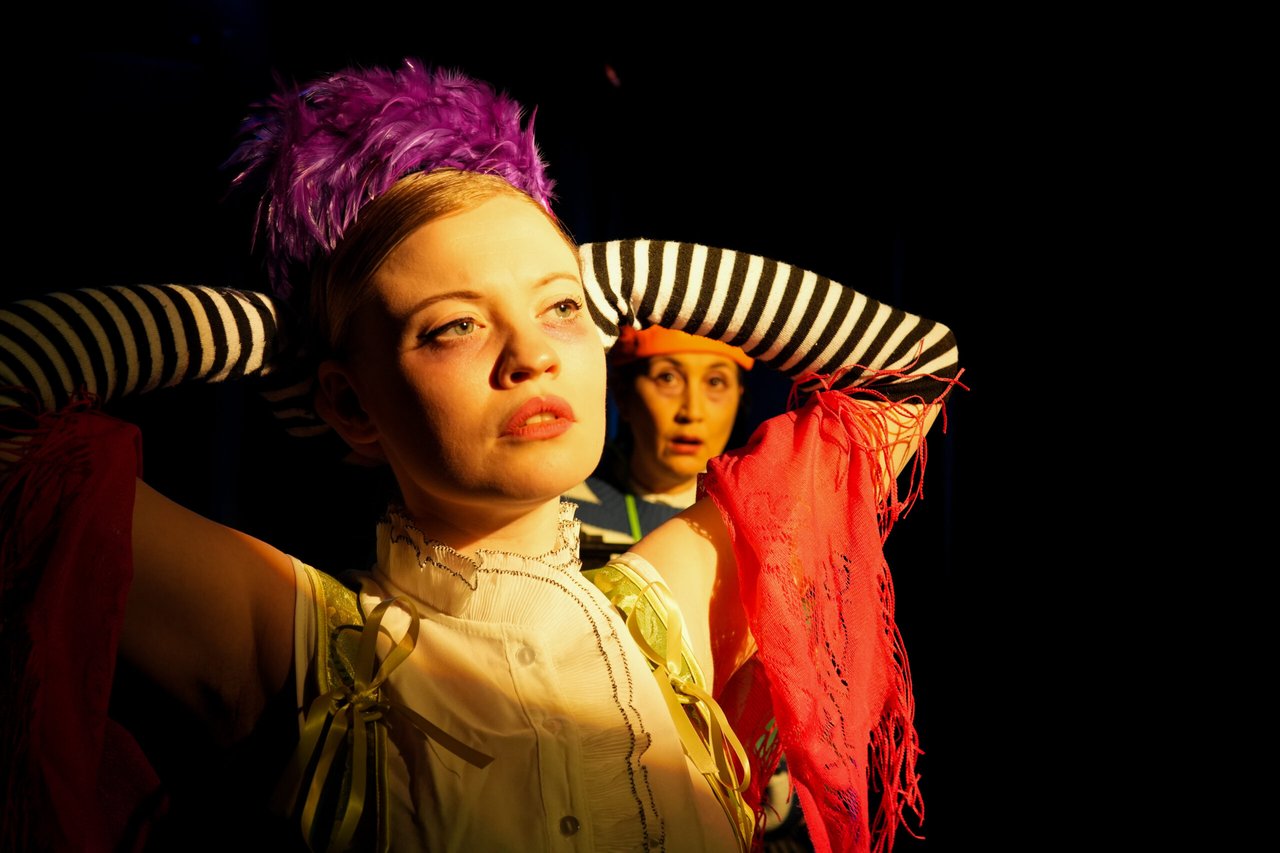
Discovering Toronto's Eldritch Theatre
In Toronto, a cultural night out is rarely in short supply. Between Mirvish premieres, opera, ballet, contemporary drama, gallery openings, and restaurants that require reservations weeks in advance, the city offers no shortage of polished evenings. Much of the city’s theatre arrives on a grand scale, beautifully produced and comfortably familiar in form. Yet even the most devoted theatre-goer sometimes looks for something unexpected.
For more than 25 years, Eldritch Theatre has quietly offered exactly that. Led by artistic director Eric Woolfe, the company stages horror-inspired productions at its home inside the Red Sandcastle Theatre in Leslieville. The venue is cozy and unpretentious, where the audience sits close enough to see the mechanics of the illusion at work. The result is intimate, uncanny, and strangely addictive…less haunted house and more Victorian séance with a touch of artful stage magic.
“Eldritch Theatre is the world’s only theatre company that tells horror stories using a ghoulishly giddy combination of live actors and puppets and parlour magic,” Woolfe says.
The description may sound flamboyant, but the work itself is tightly crafted. What distinguishes Eldritch is not simply its subject matter. It’s also Woolfe’s belief that theatre works best when it embraces its own language rather than borrowing from another medium.
“Our shows are proudly, almost aggressively, theatrical,” he says. “Theatre has thousands of years of tools that film doesn’t have.”
When discussing horror on stage, Woolfe avoids framing the conversation as theatre competing with cinema. The difference lies in the tools available to each form. Film, even when dealing with supernatural themes, tends to rely on visual realism. Theatre can operate differently.
At Eldritch, artifice is not hidden. Puppets are manipulated in full view, and magic tricks unfold openly on stage. The mechanics remain visible, yet the audience willingly invests in the illusion. That collaboration creates a different kind of intensity. The experience is not about convincing viewers that something is real. It is about inviting them to participate in belief.
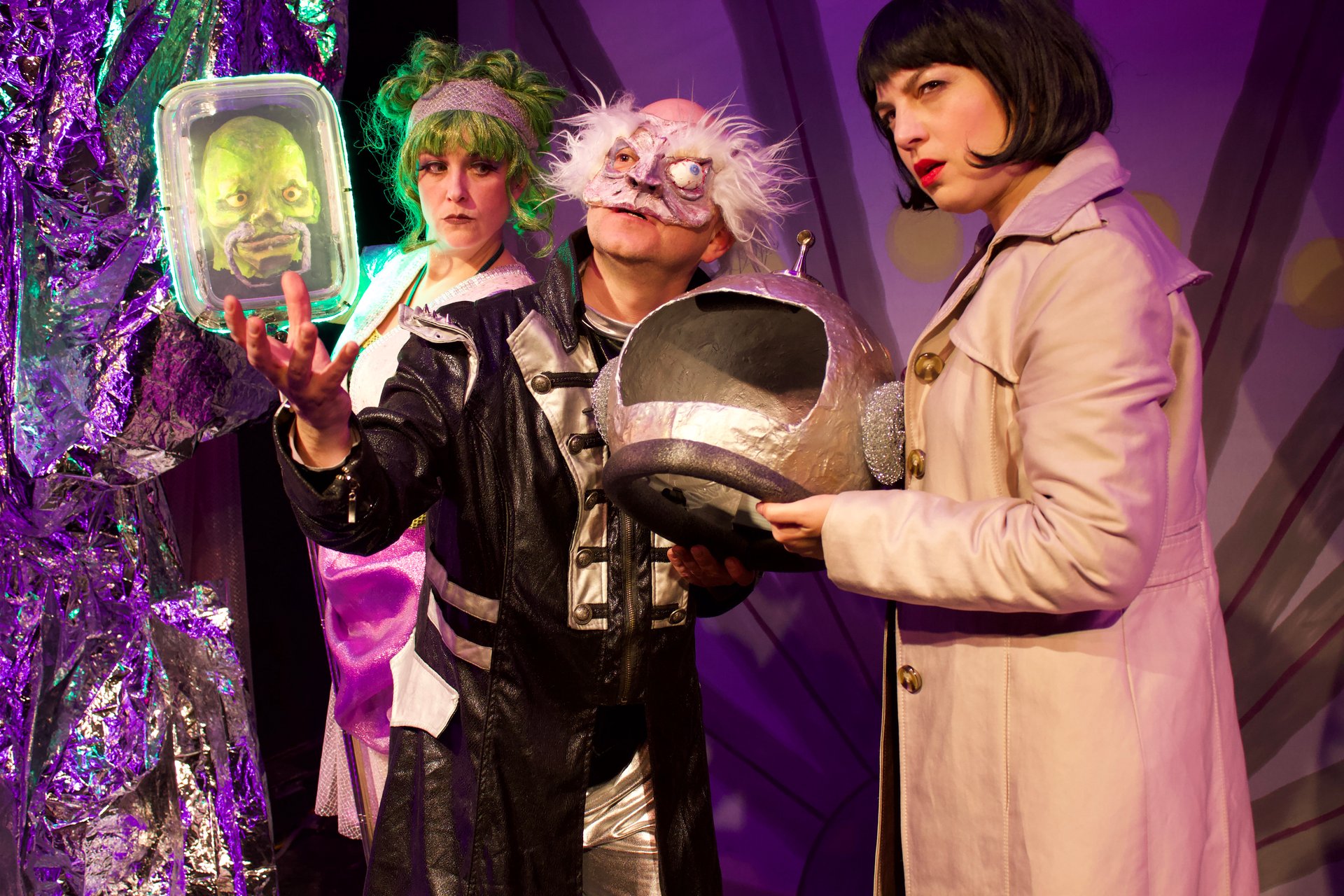
In a small room, proximity matters. The audience shares space with the performance. When something uncanny appears only a few feet away, the sensation is immediate.
Despite the subject matter, Woolfe emphasizes that his goal is not to overwhelm audiences with fear. Horror, in his view, works best when it exists in balance with pleasure.
“As a horror creator, there’s a pact you make with your audience,” he says. “Whatever comes at them, ultimately they are safe to face it in this little bubble we’ve created.”
He often compares the experience to a roller coaster. The fear heightens the senses, but the structure holds. “Every moment of fear should also be accompanied with a sense of joy and fun,” he says. “Otherwise, I’m just making people feel bad.”
That delicate balance between fear and delight is where Woolfe prefers to work. Too much terror without release becomes oppressive. Too much humour without risk becomes trivial. When the two coexist, the result is exhilaration.
An Eldritch performance rarely stays in a single emotional key. Woolfe points to an earlier theatrical tradition in which one evening was meant to offer a wide range of experiences. “We try really hard to hit all the different emotional buttons in one night,” he says. “Funny one moment, scary the next.”
For audiences accustomed to large-scale musicals, opera, and contemporary drama, the shift in scale at Eldritch can feel refreshing. One week might bring a major production at the Royal Alexandra Theatre. The next could bring a smaller performance in Leslieville where illusion, puppetry, and storytelling combine in unexpected ways.
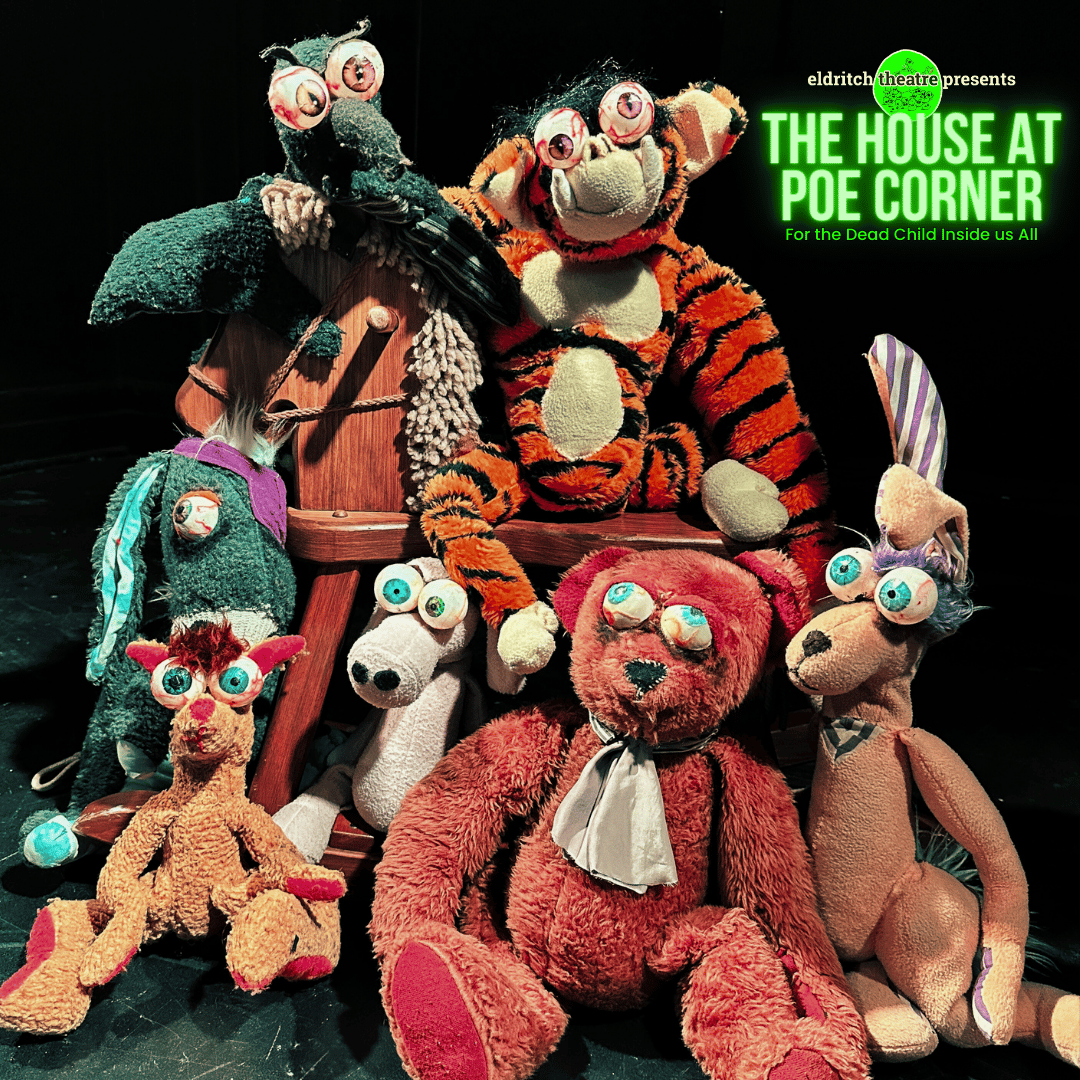
Puppetry sits at the center of Woolfe’s aesthetic. Far from being a novelty, he considers it one of theatre’s most powerful expressive tools.
“A puppet is a performance that only exists in the mind of the people watching,” he says. “We know Kermit the Frog is just green felt with ping pong balls and a hand inside. But we endow that green glove with all kinds of characteristics that don’t exist.”
Because the audience completes the illusion, the puppet gains remarkable flexibility. It can move fluidly between tones that might seem contradictory in a human performer.
In an earlier production inspired by the mythology surrounding Jack the Ripper, Eldritch introduced a towering caterpillar puppet in the opening scene. The figure could appear elegant one moment and grotesque the next, both seductive and absurd in rapid succession.
“When you’re working with a puppet, you can bake all those shifts in tone in,” Woolfe says. “Whereas if you had an actor in a caterpillar costume, all it can be is kind of cringey and stupid.”
There is also something inherently uncanny about puppets. Woolfe points to Freud’s writing on the unsettling quality of objects that appear almost human but not quite. Puppets and dolls occupy that ambiguous space. They resemble us closely enough to create tension while remaining unmistakably artificial.
That subtle dissonance is fertile ground for horror, but also for something more poetic.
For those who instinctively associate horror with spectacle or shock, Woolfe offers another perspective. The genre, he suggests, allows stories to operate symbolically in ways realism sometimes cannot.
“If you’re doing a play about an abusive father, that play can only be about an abusive father,” he explains. “If you’re telling a story about a troll that lives in a bridge, that story can be about abuse, or grief, or shame, or any number of things.”
The fantastic allows metaphor to expand. A literal story speaks to a single situation. A mythic one can resonate across many emotional experiences.
Eldritch’s audience does not always resemble the traditional subscription base of Toronto’s larger theatres. Many patrons are younger or drawn from comic-book culture and alternative arts communities. Yet the atmosphere remains welcoming rather than insular.
The Red Sandcastle Theatre places the audience within arm’s reach of the action. You see the seams of the illusion, hear the breath of the performers, and experience theatre at a scale that feels immediate.
When the lights come up, Woolfe hopes one feeling remains…wonder. “When we are at our most successful, people walk away feeling like they’ve experienced wonder above all else.”
In a city rich with theatre, that may be the most compelling invitation of all. Not simply another performance to attend, but an experience that surprises even seasoned audiences.
Fear, handled with craft and imagination, can become something unexpectedly elegant. In the small room at Eldritch Theatre, it can even feel like wonder.
Photos by Adrianna Prosser