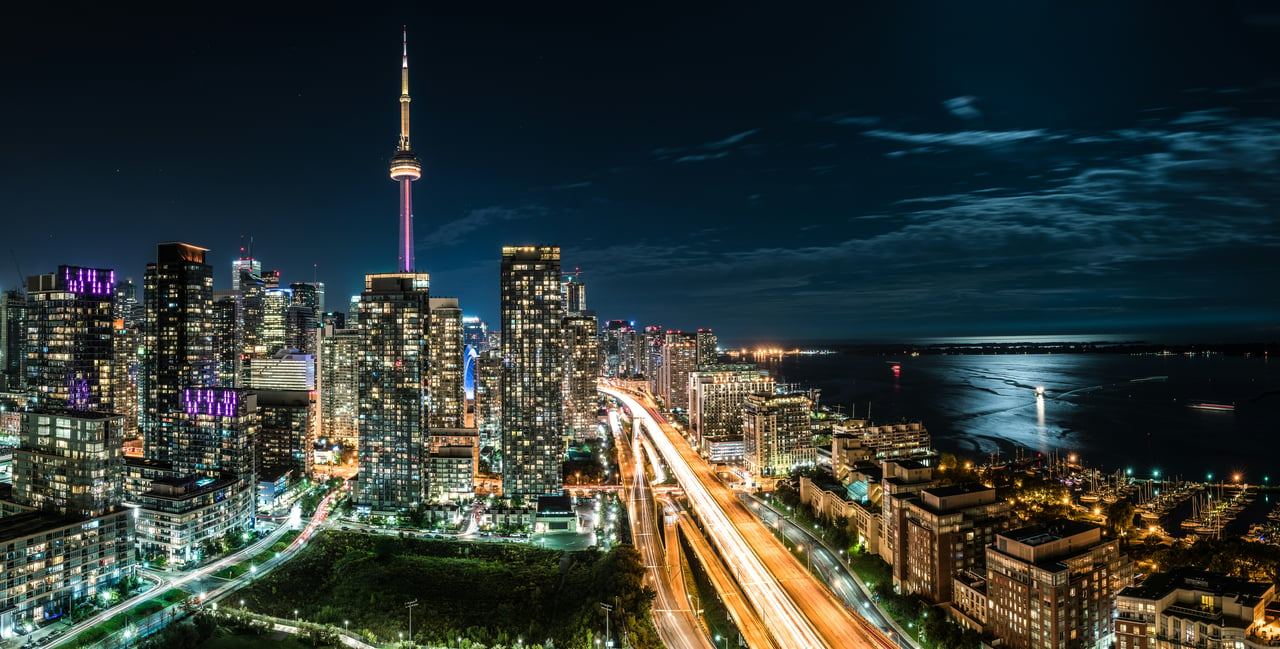
The first time it happened, nobody quite knew what to expect. On the night of September 30, 2006, Toronto turned off its usual rhythm and let art take over. Streets that closed at midnight stayed open until sunrise. Office lobbies became galleries. Strangers walked the city together in the dark, chasing light and sound and the sense that something rare was happening in their own backyard. That night became Nuit Blanche, and twenty years later, it is still the closest thing Toronto has to a citywide dream.
In 2026, Nuit Blanche marks its 20th anniversary, and the milestone lands at a moment when the city itself is thinking hard about what it wants to be. This is a story about an art event, but it is really a story about a city, the spaces it keeps reinventing, and the people who never stop showing up after dark.
How It All Began: The Birth of a Toronto Tradition
Nuit Blanche did not start in Toronto. The idea traces back to Paris, where a single sleepless art night proved so popular that cities around the world began borrowing the format. Toronto adapted it into something unmistakably its own, produced by the City of Toronto, in close partnership with the local arts community, and free for absolutely everyone.
Since that first edition, the event has featured close to 1,800 art installations from roughly 6,350 artists, generating more than $550 million in economic impact for the city. Those numbers only tell part of the story. The real legacy is cultural. Nuit Blanche gave Toronto permission to treat its public spaces, its alleys, its parking garages, and its subway stations as places worth transforming, even if only for one night a year.
Two Decades of Reinvention: How Nuit Blanche Has Evolved
What began as a single downtown experiment has grown into a citywide movement. Early editions leaned heavily on the core, but the festival has since expanded into neighbourhoods across Toronto, with recent years spreading exhibitions into zones like North York and Etobicoke alongside the traditional downtown hub. Venues have opened and closed. Artists who once showed emerging work are now household names. Some installations from years past have vanished entirely, existing only in the memories of the people who stood in front of them.
That tension between permanence and disappearance is exactly what this year's theme leans into. For its 20th anniversary, Nuit Blanche 2026 is built around the theme Tomorrow's Memories, a look back at the artists, curators, communities, and places that shaped two decades of the festival, paired with a genuine question about where it goes next. Past works will be revisited and reimagined, while new proposals explore memory, nostalgia, and the passage of time in a city that never stops changing.
Tomorrow's Memories: Inside the 2026 Milestone Edition
Mark your calendar. The 20th edition of Nuit Blanche Toronto runs from 7 p.m. on Saturday, October 3, through 7 a.m. on Sunday, October 4, 2026. It remains completely free, and it remains one of the few events in the city that pulls in art lovers, families, students, and lifelong Torontonians all at once.
Art Installations and Unmissable Moments
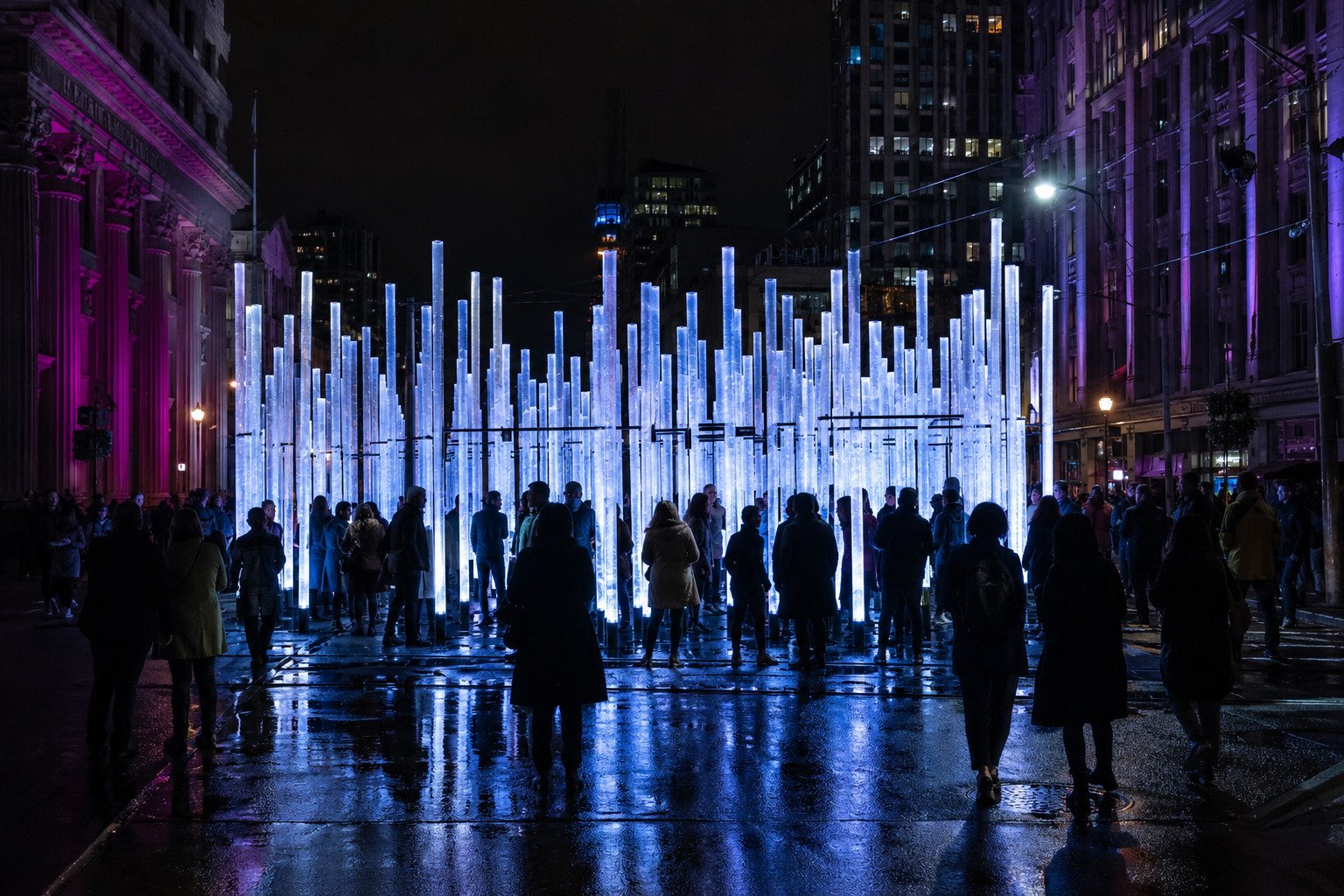
This anniversary edition will bring contemporary art to spaces across the city, with projects ranging from large-scale installations to more intimate, participatory works. The 2026 program includes both independent projects by Toronto-based artists and open call projects selected from Canadian and international submissions. Longtime Nuit Blanche venue 401 Richmond is once again opening its doors for the full night, with exhibitions, installations and performances taking over its first floor and lower level from 7 p.m. to 7 a.m.
Where to Go: Neighbourhoods Transformed After Dark
Part of the magic of Nuit Blanche is watching familiar neighbourhoods turn into something else entirely. Over the years, installations have popped up in the Bay Street Corridor, along the gallery-lined streets of Kensington Market, in the community spaces of Alexandra Park, through the polished streetscape of Yorkville, and along the Waterfront, where the lake becomes a backdrop for light and projection. Each of these areas already carries its own character during the day, and Nuit Blanche is a reminder of just how much personality Toronto's neighbourhoods hold once the sun goes down.
Getting There and Getting Around
Public transit is typically the easiest way to get around during Nuit Blanche, particularly with road closures and large crowds around major exhibition areas. In past years, the TTC has provided extended service to help visitors move between installations, while event centres have offered amenities such as maps, washrooms, and accessibility support. Details for the 2026 event, including transit service, road closures, event centres and accessibility services, will be available closer to the festival. Driving is possible but not recommended, especially in areas affected by road closures and increased pedestrian traffic.
Fueling the Night
A night this long calls for good food. Late-night diners, 24-hour spots and pop-up vendors near the main event areas keep the crowds fed from dusk until dawn. Pace yourself, bring a portable charger, dress for October weather, and treat the walk between installations as part of the experience rather than an inconvenience.
Beyond Nuit Blanche
Nuit Blanche does not exist in isolation. It sits alongside a full calendar of festivals, gallery openings, and public art programming that has made Toronto a genuine central hub for arts and culture. Anyone who falls in love with the energy of Nuit Blanche will find echoes of it throughout the year, from the vibrant culture of Queen Street West to smaller gallery nights scattered across the city.
Why Nuit Blanche Says Something Real About Toronto
Twenty years in, Nuit Blanche has become a kind of mirror for the city. It shows up in the neighbourhoods people actually live in, the streets they walk to work, and the parks they cut through on a Tuesday. It is proof that Toronto's public spaces are not static backdrops but living rooms the whole city shares, which is part of why so much of Toronto's social life now plays out in exactly where Toronto actually spends time: the parks, patios, and public squares that fill up the moment the weather cooperates.
That same spirit shows up in Toronto's most vibrant neighbourhoods, the ones that host Nuit Blanche crowds every October and everyday Torontonians the other 364 days of the year. Understanding a city this well, block by block, season by season, is exactly the kind of local knowledge that separates a good real estate experience from a great one. It is the same reason people turn to the top realtors in Toronto when they want more than a transaction. They want someone who actually knows the city.
Making the Most of Your Night
Plan a loose route rather than a rigid one. Give yourself permission to wander into whichever alley or storefront pulls you in. Go with people you like being lost with. And remember that twenty years from now, this edition of Nuit Blanche will be someone else's memory of Toronto after dark, which is exactly the point.