Toronto has always been a city where convenience drives value. Buyers pay a premium for homes that shorten the daily grind, whether that means being close to downtown, near top schools, steps from green space, or within walking distance of the restaurants and shops that make neighbourhood life feel effortless.
What’s changing now is what convenience actually looks like.
It is no longer just about being near a popular street or a well-known postal code. It is about being positioned near transit infrastructure that will reshape how the city moves. A faster commute can transform a neighbourhood’s appeal almost overnight, and a new station can quietly shift where demand begins to concentrate.
Toronto’s transit network is expanding in ways that will influence buyer decisions for years to come. Some communities are already seeing the benefits, while others are on the edge of becoming dramatically better connected. In a market where location has always been everything, connectivity is becoming one of the strongest indicators of long-term value.
For buyers, this is not simply a transportation update. It is a real estate advantage.
Transit Expansion Is Not a Trend. It’s a Market Signal
Toronto real estate has always been shaped by infrastructure, because accessibility influences how people live, work, and move through the city. When transit improves, neighbourhoods become easier to reach, commutes become more manageable, and buyers start looking beyond the same familiar pockets. Over time, that shift brings new demand, new development, and often a new price ceiling.
Transit expansion does not simply make life more convenient. It changes what buyers value, what they prioritize, and what they are willing to pay for.
This is why transit announcements, station plans, and long-term network growth matter to anyone serious about buying in Toronto. These projects are not just city updates. They are early signals of where future competition may build and where today’s overlooked areas may become tomorrow’s high-demand markets.
If you are actively exploring the Toronto market, it helps to view these changes through a real estate lens. Harvey Kalles Real Estate offers insight into how lifestyle and long-term value intersect in a city that continues to evolve, and you can begin by browsing our curated Toronto real estate listings.
Line 5 Eglinton Crosstown: Midtown Connectivity With Real Long-Term Impact
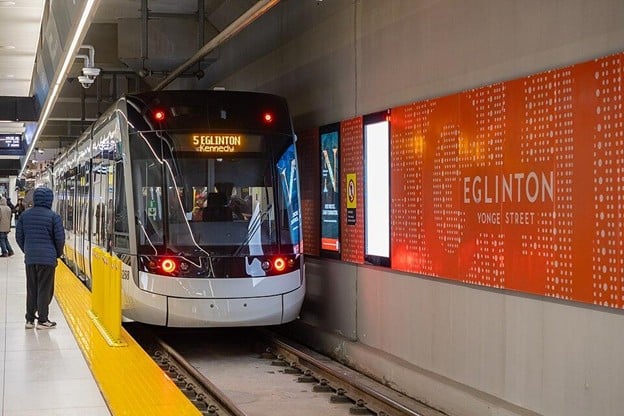
The Eglinton Crosstown has been one of Toronto’s most talked-about transit projects for years, and for good reason. Now operational, it creates a major east-west corridor through midtown Toronto, linking neighbourhoods that have traditionally relied on slower surface routes or indirect subway connections. The 19-kilometre line with 25 stations operates from Mount Dennis to Kennedy, marking the completion of a long-delayed project.
From a real estate perspective, the Crosstown matters because it improves access to some of the city’s most established residential pockets, while also supporting long-term development along the Eglinton corridor. As transit becomes more reliable across midtown, buyers are likely to place even more value on neighbourhoods that offer both lifestyle and connectivity.
Line 6 Finch West LRT: A Major Shift in Northwest Toronto
One of the most meaningful transit changes is already in place. Line 6 Finch West is now open, bringing rapid transit service to northwest Toronto, and creating a more efficient connection between Humber College and Finch West Station along Finch Avenue West.
For years, this part of the city has offered strong value, larger housing options, and established communities, but it has often been overlooked by buyers who felt commuting would be a daily headache. That perception is beginning to shift. When transit becomes easier and more predictable, neighbourhoods that once felt out of reach start to look less like a compromise and more like an opportunity.
As a result, the Finch West corridor may draw growing interest from buyers who are focused on practicality as much as lifestyle.This includes first-time buyers who want to stay within Toronto, families looking for more space at a different price point, and investors tracking long-term rental demand near transit infrastructure.
Transit does not reshape the market overnight, but it does influence where buyers are willing to look, and where competition tends to build over time.
The Ontario Line: The Project That Could Redraw the City
If Line 6 represents a meaningful shift, the Ontario Line represents something much bigger. This is not a minor adjustment to Toronto’s transit system. It is a major rapid transit project currently under development, planned to run approximately 15.6 kilometres through the city and include 15 new stations. According to Metrolinx, the Ontario Line is designed to connect Exhibition Place through downtown Toronto, and extend toward the Don Mills area, with a planned connection at Line 5 Eglinton.
The importance of the Ontario Line is not just that it adds another route. It is intended to increase transit capacity through the city’s core, create faster and more direct connections between key areas, and relieve pressure on existing subway lines that have been stretched thin for years. That type of infrastructure does more than improve commuting. It changes how people evaluate neighbourhoods.
From a real estate perspective, the Ontario Line has the potential to influence buyer behaviour in two very specific ways. First, it expands what counts as “commutable.” Many buyers limit their search because Toronto commuting can be exhausting and unpredictable. Even a small improvement in travel time can reshape what feels realistic for working professionals. When transit becomes faster and more reliable, neighbourhoods that were previously dismissed as inconvenient start to look like smart long-term choices.
This is part of the reason Toronto continues to produce standout homes and consistently competitive markets, as explored in our feature on notable Toronto homes and celebrity-level properties. Transit is often the invisible factor behind why certain neighbourhoods become prestige markets over time, and why some areas hold their value more consistently than others.
Yonge North Subway Extension: A GTA Project That Will Affect Toronto
The Yonge North Subway Extension is another major project that will reshape how people move through the region. Metrolinx has stated that the extension is approximately eight kilometres long and will add five new stations, expanding Line 1 north from Finch Station into York Region.
Although this project sits outside the downtown core, it still matters to Toronto real estate because it influences commuter behaviour. When regional transit becomes more connected, buyers begin to reassess what feels like a reasonable distance from the city. That shift has a ripple effect across pricing, competition, and demand. It also changes the way buyers compare Toronto neighbourhoods against nearby markets that suddenly feel easier to access.
The bigger takeaway is simple: Toronto is no longer competing only with itself. It is competing with a GTA that is becoming more connected, more accessible, and, for some buyers, more appealing.
Transit Changes How Families Buy, Too
Families remain one of the most consistent buyer groups in Toronto, and they tend to approach the market differently than other segments. They are typically less impulsive, more research-driven, and far more sensitive to the practical realities of day-to-day life.
For this group, transit is not just a convenience…it is a deciding factor.
Families are not only buying a house, they are buying a routine. They are thinking about school drop-offs, commuting patterns, extracurricular schedules, and how easily they can move through the city without every weekday feeling like a logistical puzzle. A neighbourhood that looks appealing on paper can quickly lose its shine if it adds unnecessary friction to an already busy lifestyle.
If schools are a key priority, our guide to Toronto neighbourhoods with the best schools is a strong starting point. In many cases, the most competitive family-friendly areas also benefit from strong transit access, which is part of what keeps demand steady even as the market shifts.
What Smart Buyers Are Doing Right Now
The buyers who win in Toronto are not always the ones with the highest budgets. They are the ones who understand timing.
Smart buyers are already:
- Tracking transit corridors before the market fully reacts
- Focusing on neighbourhood fundamentals, not just hype
- Buying based on future connectivity, not just current convenience
- Thinking long-term about resale value, not just lifestyle today
They are also using expert guidance to interpret which areas are truly positioned for long-term growth and which are simply being marketed that way.
If you want that kind of insight, explore our team of experienced Toronto real estate agents. A strong agent will help you see past surface-level narratives and focus on what actually moves value in Toronto.
Final Thought: The Market Always Follows Infrastructure
Toronto will always have neighbourhoods that dominate headlines, and that is unlikely to change. Certain areas will continue to carry prestige, attract competition, and set the tone for the market.
However, the next phase of Toronto real estate will not only be defined by the city’s most established neighbourhoods. It will also be shaped by areas that are becoming better connected, better positioned, and more appealing to buyers who recognize opportunity before it becomes obvious.
Transit expansion creates access, but it also creates competition. Buyers who understand where the city is investing, and how those investments influence daily life, are often the ones who make the smartest long-term decisions.
To explore Toronto’s evolving neighbourhood landscape and learn more about how we support buyers across the city, visit Harvey Kalles Real Estate to explore our areas of expertise.
Because in Toronto, the future rarely arrives with fanfare. More often, it arrives quietly, one transit line at a time.