By Harvey Kalles Real Estate Ltd., Brokerage
Key Takeaways
- For nearly a century, from the mid-1850s to 1950, Torontonians often began the year by voting in municipal elections held on or around New Year's Day.
- The New Year's levee, a tradition that evolved into a public reception on January 1, dates back to New France in 1646.
- The popular New Year's Eve concert at Nathan Phillips Square began on December 31, 1984, eventually attracting tens of thousands of people each year.
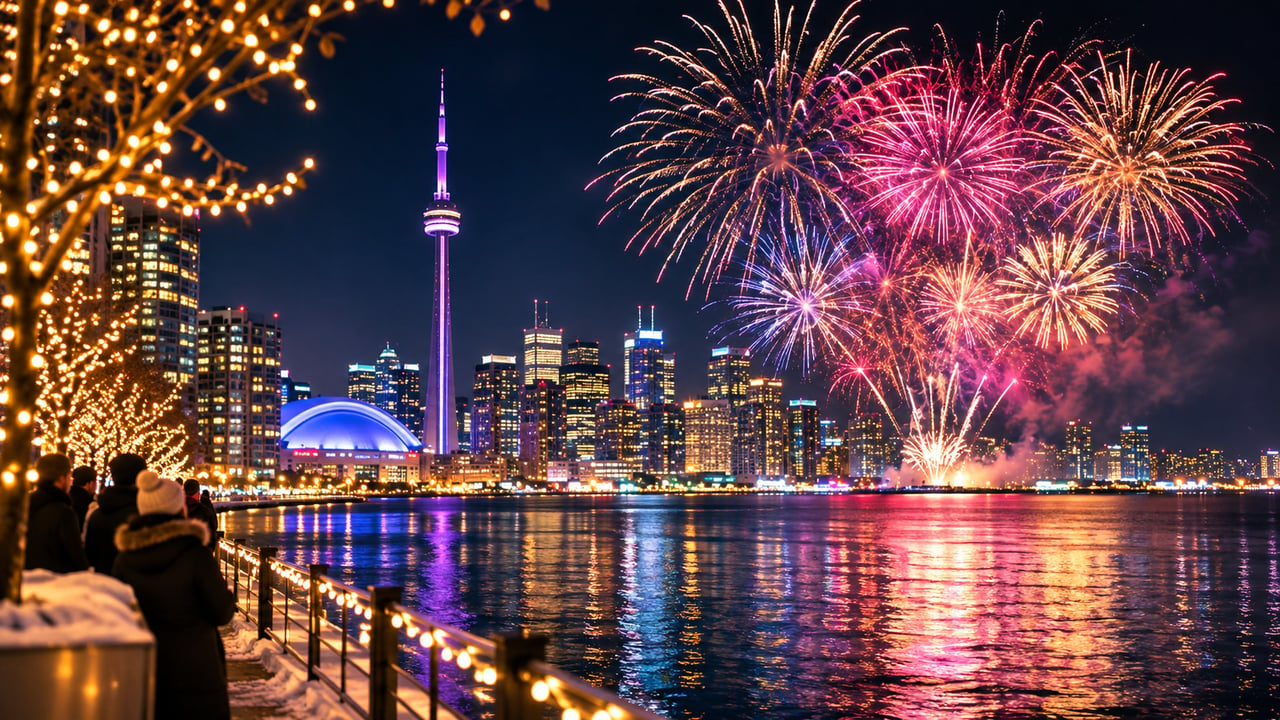
- Toronto introduced large-scale waterfront fireworks to welcome 2022, with the downtown waterfront subsequently becoming the focal point of the City's New Year's Eve celebrations.
December 31, 1984.
More than 8,000 people gather at Nathan Phillips Square to celebrate New Year's Eve. The excitement builds as the city prepares to welcome another year with live entertainment and a televised celebration.
Few could have imagined that the evening would mark the beginning of one of Toronto's most beloved holiday traditions, lasting for decades.
From civic elections and public levees to concerts at City Hall and spectacular fireworks over the harbour, Toronto's New Year's traditions reflect the city's remarkable evolution.
At Harvey Kalles Real Estate, we have spent decades helping people find their place in this city. The real estate agents in Toronto on our team understand that a city's history, traditions and shared experiences are an integral part of what makes its neighbourhoods feel like home.
But Toronto's New Year's traditions began long before that memorable evening in 1984, back when the first order of business for many Torontonians on New Year's Day was heading to the polls.
Why Did Toronto Once Vote on New Year's Day?
For much of Toronto's early history, January 1 was more than a holiday. It was also election day.
Historical records show municipal elections taking place on January 1 and 2 as early as 1855. Throughout much of the first half of the 20th century, Torontonians continued to elect their municipal representatives on or around New Year's Day, according to this list of Toronto municipal elections.
The last election held on New Year's Day took place on January 1, 1949. One final January election followed on January 2, 1950, when voters approved a change to the election schedule.
Beginning in December 1950, municipal elections moved to the first Monday in December. In 1978, election day shifted to November, eventually moving to the October dates familiar to Torontonians today.
While voting is no longer part of the city's New Year's celebrations, another centuries-old civic tradition continues to bring people together.
What Is a New Year's Levee?
Some of Toronto's New Year's customs are considerably older than the city itself.
A New Year's levee is a traditional reception, typically held on January 1, where public officials welcome guests and exchange good wishes for the year ahead.
The first recorded levee in what is now Canada took place in 1646, hosted by Charles Huault de Montmagny, the Governor of New France. The tradition continued during the fur trade, when New Year's Day was an occasion for festivities and courtesy visits to the leaders of forts and trading posts.
Over the centuries, what began as a formal reception evolved into a more inclusive community gathering.
The tradition continues in Ontario, with the Lieutenant Governor of Ontario hosting a New Year's levee at Queen's Park in 2025, welcoming members of the public.
Toronto has its own tradition of mayoral levees, historically associated with Mayor William Dennison and St. Lawrence Hall.
As the city evolved, so did the format of the celebration. In 2015, Mayor John Tory introduced a more informal approach to the traditional reception, replacing the receiving line with a family skate at Nathan Phillips Square, as reported by CBC News.
It was a fitting adaptation of a centuries-old custom, bringing Torontonians together in one of the city's most recognizable public spaces.
How Did Nathan Phillips Square Become the Place to Be?
Since its opening, Nathan Phillips Square has served as Toronto's gathering place, hosting celebrations, cultural events and some of the city's most memorable public occasions.
Toronto's new City Hall officially opened on September 13, 1965, with the skating rink having opened the previous year. In 1967, the inaugural Cavalcade of Lights introduced another enduring holiday tradition, illuminating the City's official Christmas tree and bringing festive cheer to the square.
The stage was set for what would become one of Toronto's biggest annual celebrations.
On December 31, 1984, as Toronto marked the 150th anniversary of its incorporation, Nathan Phillips Square hosted its inaugural major New Year's Eve concert, attracting more than 8,000 people. The event's origins are explored in blogTO's history of the New Year's Eve party.
The family-friendly celebration quickly grew in popularity, combining live music, skating, entertainment and the excitement of a shared countdown to midnight.
Attendance reached approximately 50,000 in 2014 and an estimated 90,000 by New Year's Eve 2019.
For generations of Toronto families, counting down to midnight at City Hall, whether in person or watching from the comfort of home, became an essential part of welcoming the new year.
When Did the Celebration Move to the Waterfront?
As Toronto's population grew and the popularity of its New Year's Eve celebrations increased, Nathan Phillips Square could no longer safely accommodate the scale of the event.
The pandemic also changed how the city celebrated. On December 31, 2021, Toronto welcomed 2022 with fireworks staged along the Lake Ontario waterfront, accompanied by an online broadcast.
In December 2022, the City announced that its celebration to welcome 2023 would once again move away from Nathan Phillips Square. Instead, the festivities featured two synchronized high-altitude fireworks displays across the downtown waterfront, visible from locations overlooking the inner harbour.
Meanwhile, public skating and holiday light displays remained at Nathan Phillips Square, allowing visitors to enjoy both longstanding and emerging traditions.
The waterfront has remained the focal point of Toronto's official New Year's Eve celebrations.
To welcome 2026, the City organized a free evening of entertainment along the downtown waterfront, featuring live music at Harbourfront Centre, interactive dance performances at Sherbourne Common and films projected onto the Canada Malting Silos.
At midnight, a spectacular 10-minute fireworks display illuminated the inner harbour. Designated viewing areas included the Toronto Music Garden, HTO Park and Sugar Beach, while the TTC, GO Transit and UP Express offered complimentary service from 7 p.m. until 8 a.m. the following morning, according to the City of Toronto.
With the city's illuminated skyline and expansive lake views providing a dramatic backdrop, the waterfront has become a fitting setting for the next chapter in Toronto's New Year's Eve celebrations.
How Do Toronto's Neighbourhoods Celebrate Today?
One of the many advantages of living in a city as diverse as Toronto is the variety of ways to celebrate. From lively outdoor festivities to intimate dinners with friends and family, each neighbourhood offers its own distinctive New Year's experience.
The waterfront: With spectacular harbour views, live entertainment and the City's recent tradition of midnight fireworks, residents of the waterfront communities are particularly well positioned to enjoy the festivities.
The Distillery District: The Distillery Winter Village brings festive lights, seasonal treats and holiday charm to the historic cobblestone streets well into the new year. Discover more about this remarkable neighbourhood in our article on the Distillery Historic District.
Yorkville and downtown: Elegant restaurants, special tasting menus, sophisticated hotel celebrations and intimate gatherings offer a more refined way to welcome the new year. Our guide to the best ways to celebrate New Year's Eve in Toronto offers inspiration for every style of celebration.
Nathan Phillips Square: Although the City's main New Year's Eve celebration has moved to the waterfront, the outdoor skating rink, festive lights and iconic Toronto sign continue to make the square a wonderful destination for a holiday outing.
A Tradition That Continues to Evolve
From ballot boxes and formal receptions to outdoor concerts and spectacular waterfront fireworks, Toronto's New Year's celebrations have changed considerably over the years.
Yet the spirit behind these traditions remains much the same: bringing people together to celebrate new beginnings and a shared sense of community.
It is the same spirit that fills Toronto's streets during Nuit Blanche, draws families to neighbourhood festivals and brings friends together for their first outdoor skate of the winter.
These experiences help define the character of Toronto and make its neighbourhoods such wonderful places to call home.
Whether you are welcoming the new year along the waterfront, enjoying an evening out in your favourite neighbourhood or celebrating at home with the people you love, you are continuing a tradition that generations of Torontonians have helped shape.
From all of us at Harvey Kalles Real Estate, we wish you a happy, healthy and prosperous new year.
Frequently Asked Questions
When Did the New Year's Eve Party at Nathan Phillips Square Start?
The major annual New Year's Eve concert at Nathan Phillips Square began on December 31, 1984, during Toronto's 150th anniversary year. The inaugural celebration attracted more than 8,000 people and evolved into one of the city's most popular holiday traditions. By New Year's Eve 2019, attendance had grown to an estimated 90,000 people.
Where Does Toronto Celebrate New Year's Eve Now?
Toronto introduced large-scale waterfront fireworks on December 31, 2021, to welcome 2022. Since the celebration welcoming 2023, the downtown waterfront has served as the focal point of the City's official New Year's Eve festivities. To welcome 2026, the City hosted free entertainment at Harbourfront Centre and along the waterfront, culminating in a 10-minute midnight fireworks display over the inner harbour. Visitors should consult the City of Toronto's official website for upcoming celebrations and event details.
What Is a New Year's Levee in Toronto?
A New Year's levee is a traditional reception, generally held on January 1, where public officials welcome guests and exchange good wishes for the coming year. The Canadian tradition dates back to New France in 1646. In Toronto, levees have been hosted by the Lieutenant Governor of Ontario at Queen's Park and by successive Toronto mayors, with celebrations evolving over time to include more informal community activities.
Did Toronto Really Hold Elections on New Year's Day?
Yes. For nearly a century, Toronto regularly held municipal elections on or around January 1. Historical records document voting on January 1 and 2 as early as 1855. The last election held on New Year's Day took place in 1949, followed by a final January election on January 2, 1950. Later that year, voting moved to December. Municipal elections subsequently shifted to November and eventually to October.