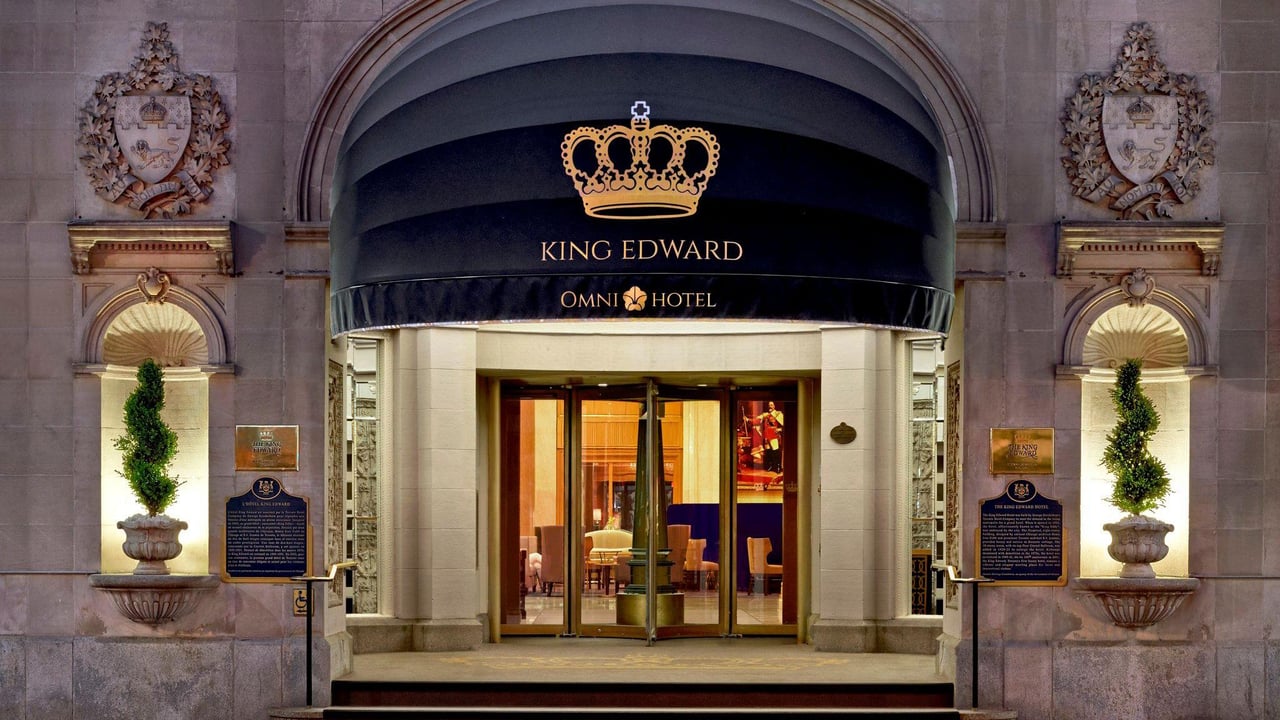
Ontario is home to a small constellation of heritage hotels where the history is structural, not decorative. These are working buildings from the 1800s and early 1900s that have been restored rather than reproduced.
There is a particular pleasure in staying somewhere that has been around for a long time. Not the performance of history, the reproduction fireplace, or the laminated placards, but the real thing: plasterwork that took a craftsman weeks to complete; a ballroom that has hosted a century of celebrations; stone walls that know what a winter sounds like.
Ontario has these places. A surprising number of them, and in enough variety that the question is not whether to seek them out, but which one to visit first.
For those who understand that the character of a building is not separate from its value, but inseparable from it, these are the properties worth knowing.
At a Glance: Ontario's Heritage Hotels • The Omni King Edward (Toronto, 1903) — Toronto's first purpose-built luxury hotel • Langdon Hall (Cambridge) — Ontario's only Relais & Châteaux property • Elora Mill Hotel & Spa (Elora, 1832) — a restored gristmill above the Elora Gorge • Windsor Arms (Toronto, 1927) — a neo-Gothic boutique hotel in Yorkville • Prince Edward County — Merrill House, The Royal Hotel, The CAPE, and The Drake Devonshire | |||
Property | Location | Built | Known For |
The Omni King Edward | Toronto | 1903 | Toronto's first purpose-built luxury hotel; Edwardian Baroque interiors |
Langdon Hall | Cambridge | Federal Revival manor, restored late 1980s | Ontario's only Relais & Châteaux property |
Elora Mill Hotel & Spa | Elora | 1832 gristmill, restored 2018 | Limestone-walled rooms above the Elora Gorge |
Windsor Arms | Toronto (Yorkville) | 1927 | Neo-Gothic boutique hotel, heritage designated 1983/1992 |
Merrill House | Picton | 1878 Gothic Revival mansion | MICHELIN Guide hotel; Best Historical Hotel, Central & North America, 2025 World Luxury Awards |
The Royal Hotel | Picton | Victorian railway hotel, reopened 2022 | Decade-long restoration by Giannone Petricone with ERA Architects |
The CAPE | Picton | 1863 Georgian manor | Once hosted Prime Ministers and dignitaries |
The Drake Devonshire | Wellington | Waterfront property | The Drake's design sensibility on Lake Ontario |
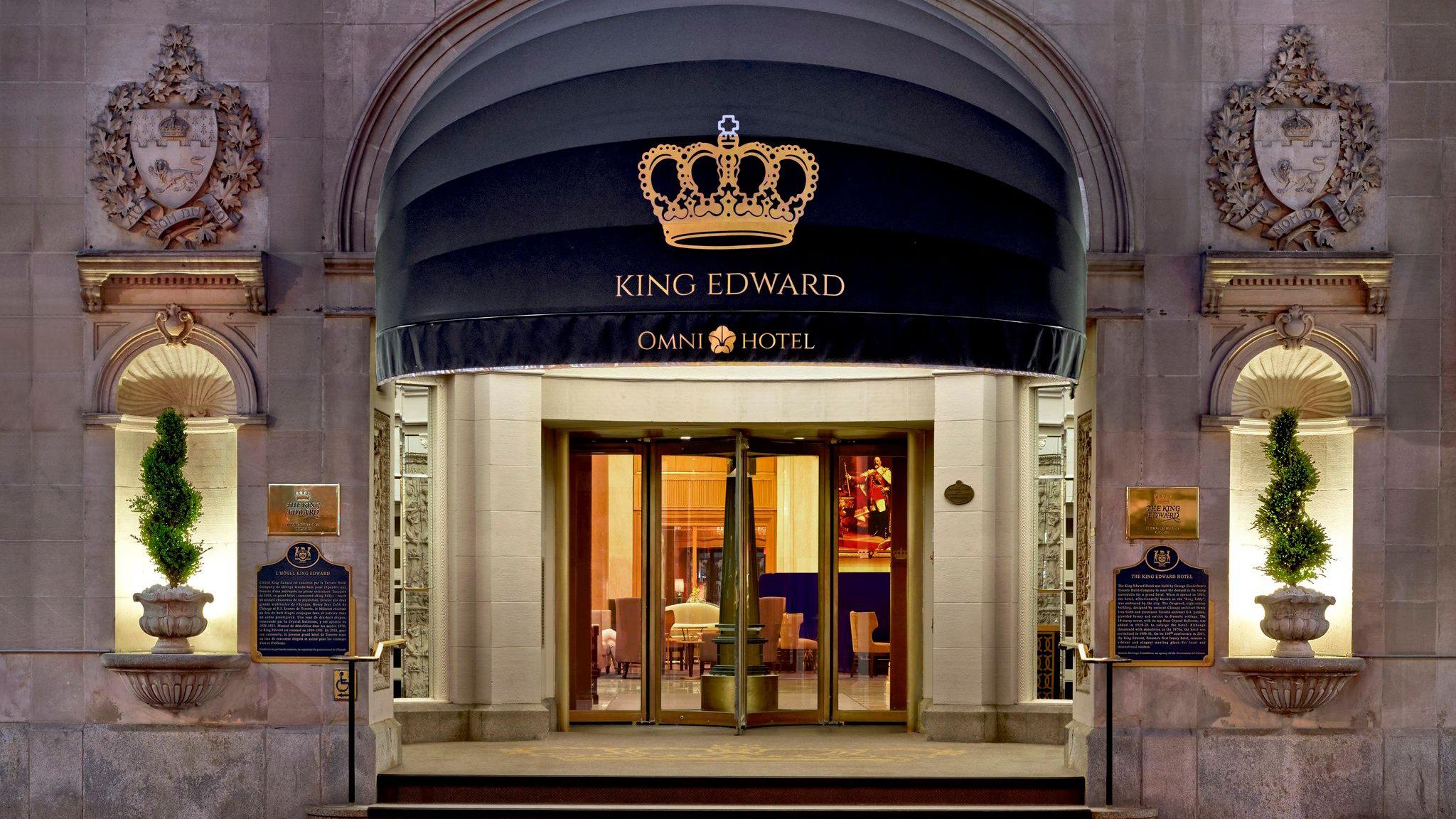
The Omni King Edward, Toronto
The King Eddy opened in 1903 as the city's first purpose-built luxury hotel, designed by E.J. Lennox and Henry Ives Cobb at a cost of three million dollars and advertised at the time as “absolutely fireproof.” More than a century later, it still stands at the corner of King and Victoria, remaining the most storied address on that block.
Its guest list reads like a catalogue of the twentieth century: Ernest Hemingway, The Beatles, Elvis Presley, and Elizabeth Taylor, who received a marriage proposal from Richard Burton in the Sovereign Ballroom in 1964.
The hotel was designated a heritage property in 1973, and after a $40-million restoration completed in 2015, its Crystal Ballroom reopened, its rotunda was returned to its original scale, and the Edwardian Baroque details that define its interior were brought back into full view.
What the King Eddy offers today is something rare: a building with genuine provenance, modernized without being sanitized. The crown mouldings are original. The marble bathrooms are not. Both are exactly right.
For anyone exploring the historical landmarks in Toronto, this is where the story of the city's ambition begins.
Langdon Hall, Cambridge
In the late 1980s, William Bennett and Mary Beaton drove up a gravel lane through the Carolinian forest to a grand house that had been left to its own devices. What they found was a Federal Revival manor built by Eugene Langdon Wilks, the son of an Englishman who had inherited American wealth. He intended the residence as a summer retreat from his homes in New York, London, and a château in the Loire Valley.
Mary and William bought it and restored it. Today, Langdon Hall is the only Relais & Châteaux property in Ontario and one of the great country house hotels in the world.
The property earns that distinction quietly, the way the best things do. Twelve kilometres of walking trails weave through the forest. A kitchen garden supplies the Five Diamond restaurant, where Chef Jason Bangerter has built a menu around ingredients grown or foraged nearby. Rooms in the main house feature fireplaces and the quiet atmosphere of a building designed for long, unhurried stays.
An hour from Toronto. A different century entirely.
Elora Mill Hotel & Spa, Elora
The building began as a gristmill in 1832, perched above the Elora Gorge at the edge of a village that Group of Seven painter A.J. Casson once called the most beautiful in Ontario. It burned twice, was rebuilt, changed hands repeatedly, and by the mid-twentieth century was being used for granary storage.
What stands there today, following a $27-million transformation completed in 2018, is thirty rooms of limestone-walled, French-inspired luxury with views of the gorge from almost every window. The original stone remains intact. There are chandeliers overhead, local art on the walls, locally crafted furniture throughout, and a restaurant that takes the same serious approach to ingredients as Langdon Hall.
The Elora Mill is proof of what patience and investment can accomplish with a building that history has already done most of the work on. The bones were extraordinary. Someone finally gave them a reason to matter again.
Windsor Arms, Toronto
The Windsor Arms was built in 1927 in the neo-Gothic style at 18 St. Thomas Street in the southern part of Yorkville. At the time, Yorkville was still a quiet residential neighbourhood, making a small luxury hotel a natural fit. It was designated a heritage property by the City of Toronto in 1983 and under the Ontario Heritage Act in 1992.
Today, it is a boutique hotel—intimate and deliberate—with the kind of attention to detail that larger properties cannot sustain. Its rooms range from comfortable to extraordinary, and its location is steps from the architecture of Bloor Street and the renowned shopping district of Yorkville.
The Windsor Arms has always attracted a particular kind of guest: those who find large hotels impersonal and prefer somewhere that feels like a private residence rather than an operation. Its heritage designation is not a constraint; it is the point.
This is the kind of building that belongs in any conversation about Toronto's most architecturally significant streets because the building itself demonstrates why that conversation matters.
Prince Edward County: The County's Heritage Hospitality
Prince Edward County has developed a constellation of heritage properties that reflects the region's unique combination of history and contemporary sensibility. The buildings came first: farmhouses, Victorian railway hotels, and Gothic Revival mansions built by the families who shaped the County's early prosperity. The hospitality came later, and it came thoughtfully.
Merrill House in Picton occupies an 1878 Gothic Revival mansion built for Edwards Merrill, scion of a Canadian legal dynasty. It has been designated a MICHELIN Guide hotel, named Best Historical Hotel in Central and North America at the 2025 World Luxury Awards, and featured in Architectural Digest and Bloomberg Pursuits. Its interiors house a remarkable collection of Egyptian busts, William Morris wallpapers, and artworks spanning centuries, assembled by a proprietor who approaches the property as a wunderkammer rather than simply a hotel. It is among the country's most remarkable boutique hotels.
The Royal Hotel in Picton tells a different version of the same story. A Victorian railway hotel that had fallen into disrepair was purchased in 2013 and restored over the following decade by architects Giannone Petricone in collaboration with heritage specialists ERA Architects. It reopened in 2022 with guest rooms named after heritage Ontario apple varieties with landscapes designed by Janet Rosenberg & Studio. Within its first few years, it earned a place on Condé Nast Traveler's Top 20 Hotels in Eastern Canada.
The CAPE, also in Picton, occupies a Georgian manor originally built in 1863 that once hosted Prime Ministers and dignitaries. The Drake Devonshire in Wellington brings The Drake's distinctive design sensibility to a waterfront setting. Each property has its own personality. What they share is the County's commitment to craftsmanship, authenticity, and thoughtful restoration.
What Heritage Properties Tell You About Value
Spending time in these places is not just pleasurable; it is instructive.
The buildings that endure do so because of decisions made at the beginning: the quality of the materials, the ambition of the design, and the willingness to build something intended to outlast its moment. The Omni King Edward was not built to be fashionable. It was built to be permanent. Langdon Hall was not designed as an investment. It was designed as a house someone intended to love for a long time.
These are the same instincts that define lasting value in residential real estate. The properties in Toronto's oldest neighbourhoods that hold and appreciate across generations do so for the same reasons the King Eddy has stood for more than a century. Materials matter. Craftsmanship matters. The willingness to do something properly from the beginning matters more than almost anything else.
Harvey Kalles has spent decades working with Toronto's most significant residential properties, the ones defined by exactly these qualities. Understanding what makes a building worth preserving, whether it is Toronto's oldest homes, Toronto's Distillery historic district, or the particular character of a neighbourhood like Summerhill, is not separate from understanding what makes a property worth buying. It is the same knowledge, applied in the same direction.
The history of Summerhill, the cinematic Toronto neighbourhoods that draw people in without their fully understanding why, the architectural streets in Toronto that feel different from every other block in the city: these are all expressions of the same principle. Some buildings carry something that cannot be built new. They can only be found.